


What's Really in Your Pizza/Pasta Sauce Jar?
Cheese gets the fan club. The sauce underneath gets ignored, right up until it's quietly hiding a shocking amount of sugar. We opened the jar to find out what's really going on in there.
A jar of tomato sauce can survive a year on a shelf, a hot delivery truck, and two monsoons, and still look exactly the same the day you open it. Meanwhile the tomatoes on your kitchen counter go bad if you so much as glance at them wrong. Something's up. (Well, something tomato-y. But you get it.)
So we did what we always do at REPEAT GUD: opened a few jars, squinted at the fine print nobody reads, and wrote down exactly what we found. No lab coat, no jargon, just us and a suspiciously well-preserved jar.
What's Actually In That Jar?
Before we go hunting for suspects, here's the full ingredient lineup, the boring, honest, 101 version.
Most jars of pizza or pasta sauce, regardless of brand, are built from some combination of the same nine things. None of them are secret. Some of them are perfectly innocent. A few are hiding something. Here's the full cast, in roughly the order they usually show up on the label.
The actual point of the product. Usually first on the label, tomatoes cooked down thick, then thinned back out with water to sauce consistency.
Unglamorous, but necessary. It's what turns concentrated tomato paste back into something you can actually pour.
Added to round off the tomato's natural tang. How much, and what kind, is where things get interesting.
Doing exactly what salt always does. No conspiracy here, just seasoning.
Adds a richness that slow-cooked tomatoes would normally provide for free. Worth a closer look.
Things like citric acid, keeping the pH steady from batch to batch. A food-safety measure more than a flavour one.
Oregano, basil, onion, garlic, the usual suspects. This is the part actually doing the flavour work.
Things like xanthan gum, keeping the texture from separating on a shelf for a year straight.
Things like sodium benzoate, there to help the jar survive a warehouse, a delivery truck, and your pantry.
Nine ingredients, and honestly, six of them are exactly as boring as they sound, water is water, salt is salt, nobody's losing sleep over an acidity regulator. It's the three flagged above, the sugar, the oil, and the stabiliser, that actually decide whether a jar is "tomatoes with help" or "a science project wearing a tomato costume." Those three get the full interrogation below.
The Evidence
Three things most tomato sauce jars are hoping you never read this closely.
The Jar That Refuses to Age
Real tomatoes are moody. They sulk, they darken, they leak a little water, basically, they act like tomatoes. A sauce that looks exactly the same after 12 months isn't being a good tomato. It's pulling a magic trick. The magician here usually has a name: xanthan gum. In plain words, it's a powder made by fermenting sugar with a food-safe bacteria until it turns into a gel. Think of it as invisible hair gel for your sauce, it holds everything neatly in place so the sauce always looks camera-ready. Healthline says it's totally safe to eat in normal amounts, so no need to panic. It's just not something your dadi's kitchen ever needed.
The Sugar You Never Asked For
Here's the thing about tomato sauce, our hero ingredient in this whole post, the one Pizza/Pasta Sauce is built on too: it doesn't taste like dessert, which is exactly the problem. Sugar sneaks in and nobody notices. Harvard's Nutrition Source puts tomato sauce in the same sneaky-sugar club as soup and ketchup: savoury on the label, secretly sweet on the inside. Some jars run close to 10-15% sugar. Translate that into real life and a couple of spoons poured over your pasta can already eat into a big chunk of what ICMR-NIN's 2024 Dietary Guidelines for Indians recommend for an entire day, roughly 20-25 grams of added sugar for adults. And that's before your evening chai even shows up.
The Oil That Isn't There for You
Check the first few ingredients. Spot "vegetable oil" or "soybean oil" hanging around near the top? Not a coincidence. That's a seed oil, oil pressed from seeds like soybean or sunflower instead of a fruit like olives. Factories love it because it's cheap and doesn't spoil in a hurry. Cleveland Clinic dietitians say seed oil itself isn't the villain, but it turns up constantly in what's called ultra-processed food, food that's been through so many factory steps it's basically forgotten what it used to be. In a tomato sauce, that oil is usually there to fake the richness slow-cooked tomatoes would give you for free, like a Halloween costume of flavour.
The Background Check
A quick, mostly painless general-knowledge detour before the verdict.
Quick naming note, since it trips people up: "pasta sauce" isn't really its own aisle in an Indian kitchen or a local store. What Indian households actually reach for is tomato sauce, the same bottle that goes on Maggi, on a sandwich, and yes, on pasta too. There's no separate "pasta sauce" category the way there might be abroad, it's tomato sauce doing double duty.
There's also a simpler reason for the name, and it's the one that actually matters: tomato is the hero ingredient. It's the single largest thing in the jar by weight, everything else, oil, salt, herbs, sweetener, is there to support it, not replace it. Calling it "pasta sauce" names the dish it ends up in. Calling it tomato sauce names what's actually inside. We'd rather the label do the second one. That's exactly why REPEAT GUD named its own jar Pizza/Pasta Sauce rather than picking one: same tomato-forward base, spread thin under cheese for a pizza, or tossed straight through pasta. Once sugar, oil, and stabilisers get involved though, the line blurs even further, so the ingredient list matters a lot more than whichever name is printed on the jar.
Good news if you're shopping in India: FSSAI (basically India's food referee) has been pushing brands to put clear warnings on the front of the pack when a food is high in fat, sugar, or salt, known in the trade as HFSS foods. Until that becomes the norm everywhere, flipping the jar over and reading it yourself is still your best move. Think of it as a five-second background check before the jar joins your trolley.
And a quick word on jaggery, or gur, because everyone's grandmother has strong opinions about it. It's made by boiling down sugarcane juice without refining it into the white stuff. It's less processed and does bring a few trace minerals along for the ride, but let's be honest, it's still sugar. We're not going to pretend jaggery gives anyone superpowers. We just like that it's a real, recognisable ingredient instead of something out of a chemistry set.
The Lineup
Same job description. Wildly different criminal record.
- Sweetened with refined sugar, the boring processed kind
- Seed or vegetable oil, hovering suspiciously near the top of the label
- Gums or stabilisers, basically edible glue, for that eternal shelf life
- Built to survive 12+ months without a single wrinkle
- Never separates. Ever. Kind of creepy, honestly.
- Sweetened with jaggery (gur), not refined sugar
- Zero seed oils, zero palm oil
- No gums, no stabilisers, no edible glue
- Lab-tested batches, not shelf-life magic tricks
- Might separate a little. That's called "being real tomatoes." Just stir it.
Our GUD Advice
Three things worth a five-second check before any jar goes in your basket.
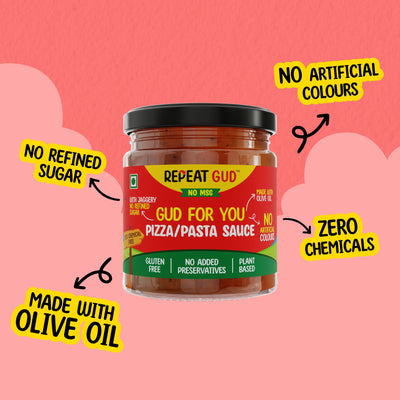
Run REPEAT GUD's Pizza/Pasta Sauce through the same checklist and here's the report: jaggery instead of refined sugar, zero seed oils, zero gums, and nothing on the label that needs Google Translate. If it separates a little in the jar, relax, that's just tomatoes being tomatoes. Give it a stir and get back to dinner.
Other Sauces, Same Checklist
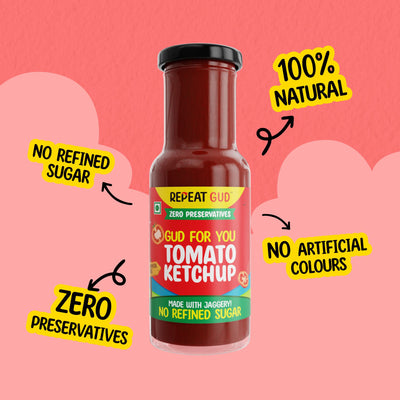
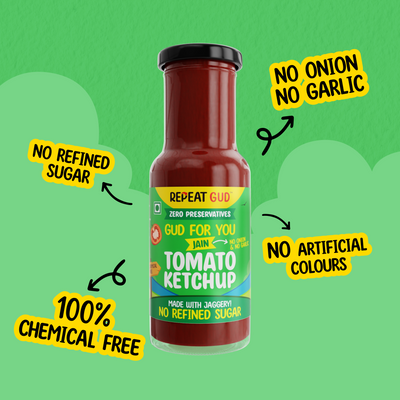
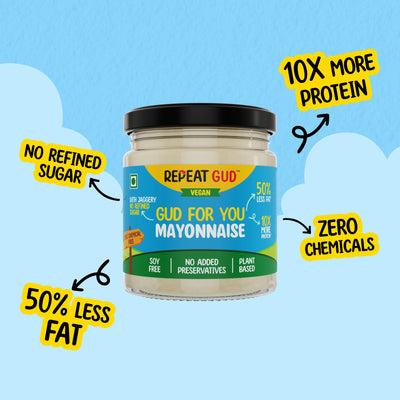
Liked what you read? These jars follow the exact same rulebook.
Questions We Get, A Lot
Is regular tomato sauce actually bad for you?
Why does tomato sauce taste sweet even though it's savoury?
What does ICMR recommend for added sugar intake in India?
Are seed oils in tomato sauce something to worry about?
Is REPEAT GUD Pizza/Pasta Sauce good for kids?
Why does REPEAT GUD's sauce separate a little in the jar?
Keep Reading
Sources referenced: Harvard Nutrition Source Healthline Cleveland Clinic WHO ICMR-NIN FSSAI
Make It a Habit Worth Repeating
One jar, zero shortcuts, nothing hiding under the label. Read it yourself, then let the sauce do the talking, minus the suspicious silence.



